AI Job Disruption: How a Single Blog Post Shook Wall Street and What It Means for Your Career
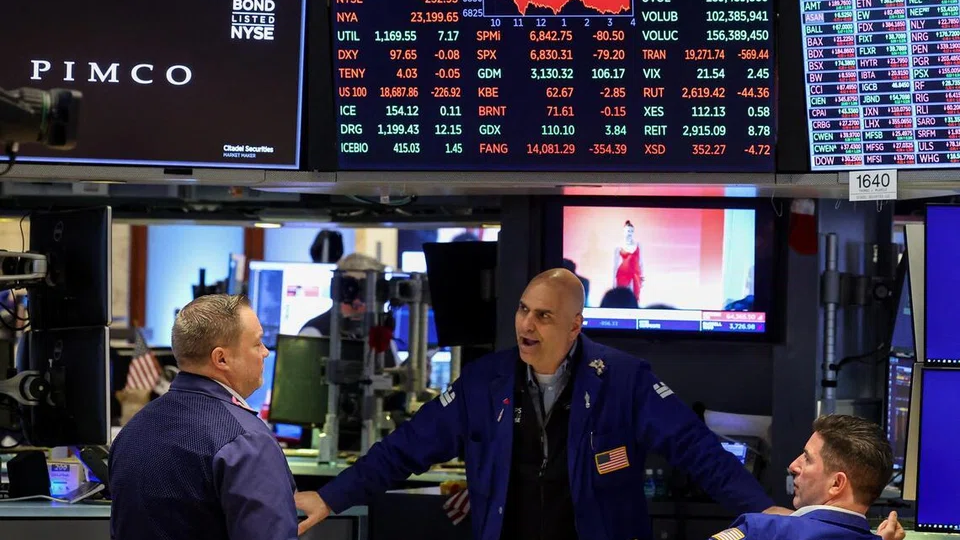
The AI Doomsday Report That Shook Wall Street
Can a Substack blog post unleash market chaos? We saw that happen recently. A post by Citrini Research predicting that capable artificial intelligence agents could trigger mass white-collar unemployment over 2026 to 2028 precipitated a sell-off in software companies, including big names like Adobe and Salesforce.
And when Block, a fintech firm founded by Jack Dorsey, announced layoffs to half its staff because AI enabled it to do more with fewer, that doomsday scenario seemed almost prophetic.
The chasm deepened when Anthropic released a tool in end-February automating the update of legacy code across legal services, finance and government – labour-intensive sectors that hired vast numbers of working professionals. Anthropic’s move wiped out value from the stock markets because it called into question the basis of many software companies’ valuations.
That moment brought me back to Davos in January. I heard Nvidia CEO Jensen Huang articulate in no uncertain terms what the AI revolution was about – the displacement of existing Internet platforms that work and life run on today.
Just as the Internet revolution and 5G saw the proliferation of cloud services that replaced analogue software dominated by Microsoft, the scores could be reset by AI because you are no longer shackled to one software to get work done. And everyone could build their own bespoke apps to solve unique problems without the need to have learnt coding or computer science.
Is that future scenario an incredible wonderland or a bloodbath for the people who work in those sectors? It’s both, and that split screen reality of both high growth and high unemployment will be hard to navigate, as Vikram Khanna had predicted back in 2023.
So what to make of it? Vikram offers some insight. First, that “first mover advantages” are overrated – the iPod was not the first MP3 player – and something similar may happen with AI.
Second, that we do need a defensive shield for the coming displacement from AI. The Graduate Employment Survey released last week was chilling. Despite a higher proportion seeking work (92.2% compared to last year’s 90.7%), fewer Singapore university graduates found full-time employment (74.4% compared to last year’s 79.4%).
And third, in his op-ed this week, that while displacement might not reach the cataclysmic scale predicted by Citrini, that is no reason not to treat the report as a stress-test.
The bottom line? Artificial intelligence is a pretty good test on whether you’re a natural optimist or pessimist. Depending on whether you’re a half-glass-full or half-glass-empty sort of person, you might view AI through the lens of the incredible opportunity for growth and productivity, or you might see a coming apocalypse in jobs.
And depending on how fast and furious your sector might get disrupted, you might have a different take on how beneficial AI is. The key is how society gets through this intact. As the famed sociobiologist E.O. Wilson once said: “The real problem of humanity is that we have Paleolithic emotions, medieval institutions and godlike technology.”
- #ai
- #jobdisruption
- #career
- #futureofwork
- #technology
Comments · 0